

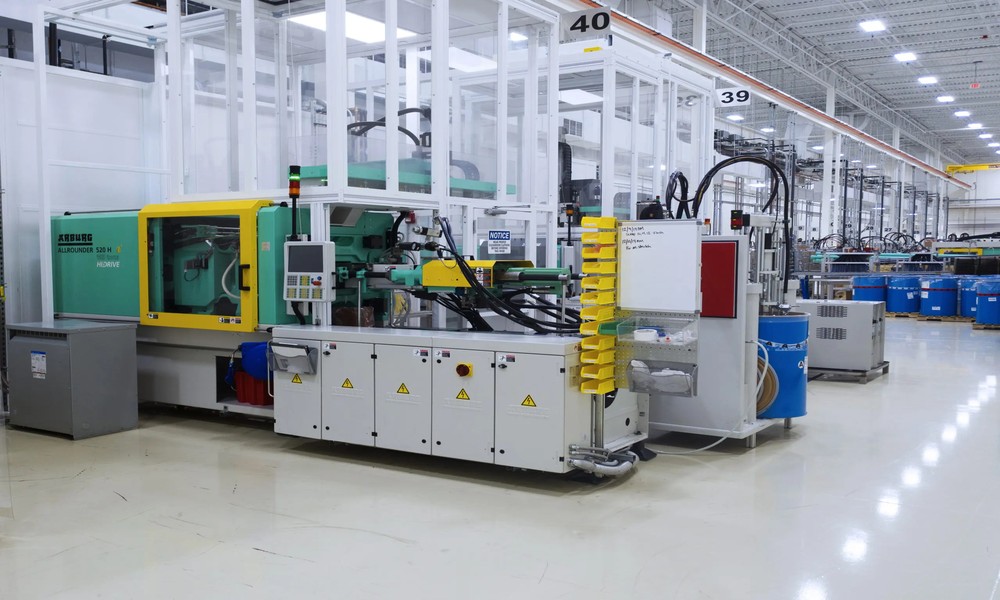
Clean room injection moulding enables manufacturers to produce medical components under strict environmental controls that eliminate contamination at every stage. Particulate matter, airborne microbes, and chemical residues threaten the integrity of implantable devices, drug delivery systems, and diagnostic cartridges. Facilities engineered with HEPA filtration, positive air pressure, and temperature regulation address these threats before they reach the production floor.
How Controlled Environments Shape Medical Output
The principle behind a controlled moulding environment is straightforward: reduce variables that compromise product safety. In a certified clean room, air passes through HEPA filters that capture 99.97% of particles down to 0.3 microns. Workers wear full gowning protocols. Raw polymer pellets enter through sealed material transfer hatches.
These measures matter because medical regulators hold manufacturers accountable for every surface a component touches between moulding and final packaging. A single fibre or skin cell trapped inside a catheter connector can trigger a product recall. Production lines outside controlled environments cannot guarantee that level of cleanliness.
ISO Classification and Room Standards
Clean rooms follow ISO 14644 classifications ranging from ISO Class 1 to ISO Class 9. Most medical device moulding operates within ISO Class 7 or Class 8 environments. These classifications define the maximum allowable particle count per cubic metre at specified particle sizes.
An ISO Class 7 room permits no more than 352,000 particles at 0.5 microns per cubic metre. Achieving this requires continuous air exchanges, typically 60 or more per hour, combined with smooth, non-shedding wall and ceiling surfaces. Flooring uses seamless epoxy coatings that resist microbial growth.
Gowning and Personnel Protocols
Staff represent the largest contamination source in any clean room. Each operator sheds roughly 100,000 particles per minute during normal activity. Full gowning, including coveralls, hoods, face masks, gloves, and boot covers, reduces that figure by over 95%.
Training reinforces behaviour: slow movements, no unnecessary touching of surfaces, and strict entry and exit procedures through airlocks. These protocols are audited regularly and documented as part of the facility’s quality management system.
Materials and Moulding Processes in Clean Rooms
Medical-grade polymers used in clean room plastic injection moulding include polycarbonate, PEEK, liquid silicone rubber, and various grades of polypropylene. Each resin arrives in sealed packaging and undergoes incoming quality checks before entering the controlled area.
The moulding machines themselves sit inside the clean room enclosure. Robotic arms extract finished parts directly from the mould cavity and place them onto clean trays or into sealed packaging. This closed-loop handling prevents human contact with the component surface.
Tooling and Mould Maintenance
Moulds used in clean room production undergo additional cleaning and validation steps compared to standard industrial tooling. Before each production run, technicians disassemble the mould, clean every surface with approved solvents, and inspect for wear or residue. They document each step in maintenance logs tied to batch records.
Preventive maintenance schedules are shorter in clean room settings. A mould running standard automotive parts might go 50,000 cycles between services. The same mould producing surgical instrument housings might require servicing every 10,000 cycles to maintain surface finish quality.
Regulatory Frameworks That Govern Clean Room Production
Medical device clean room manufacturing in Singapore operates under multiple regulatory layers. The Health Sciences Authority requires compliance with ISO 13485 for quality management systems. Facilities exporting to the United States must also satisfy FDA 21 CFR Part 820 requirements. European markets demand conformity with the EU Medical Device Regulation.
- Biocompatibility testing per ISO 10993 validates that moulded components do not cause adverse biological responses
- Process validation per IPC/JEDEC standards confirms that moulding parameters produce consistent dimensional results across production batches
- Environmental monitoring programmes track particle counts, temperature, humidity, and microbial levels at defined intervals throughout each shift
“Singapore’s regulatory alignment with both FDA and EU frameworks gives our clean room facilities a genuine advantage when serving multinational medical device companies,” said Dr. Tan Wei Lin, a biomedical engineering consultant at the National University of Singapore.
Benefits for Medical Device Manufacturers
Manufacturers choosing controlled environment moulding gain measurable advantages in product quality and market access:
- Reduced rejection rates during incoming quality inspections at customer facilities
- Faster regulatory submissions because facility documentation already meets auditor expectations
- Lower risk of field failures caused by particulate contamination in assembled devices
- Simplified supply chain qualification for OEMs seeking single-source moulding partners
Cost Considerations and Return on Investment
Clean room operations carry higher overhead than standard moulding shops. Energy consumption runs 30 to 40% above conventional facilities due to continuous HVAC operation. Consumables such as gowning supplies, cleaning agents, and HEPA filters add recurring costs.
These expenses are offset by fewer rejected batches, reduced rework, and premium pricing that medical device contracts command. A facility producing 500,000 catheter components per month at a 0.1% rejection rate saves significantly compared to a standard facility running at 2% rejection.
Choosing the Right Manufacturing Partner
Selecting a clean room moulding partner requires evaluating facility certifications, equipment capabilities, and regulatory track records. Manufacturers should request recent audit reports, review corrective action histories, and visit the production floor. The strongest partners maintain vertical integration, handling mould design, moulding, assembly, and packaging within a single clean room facility. Clean room injection moulding remains the foundation of safe, reliable medical device production for manufacturers committed to patient safety and regulatory compliance.