

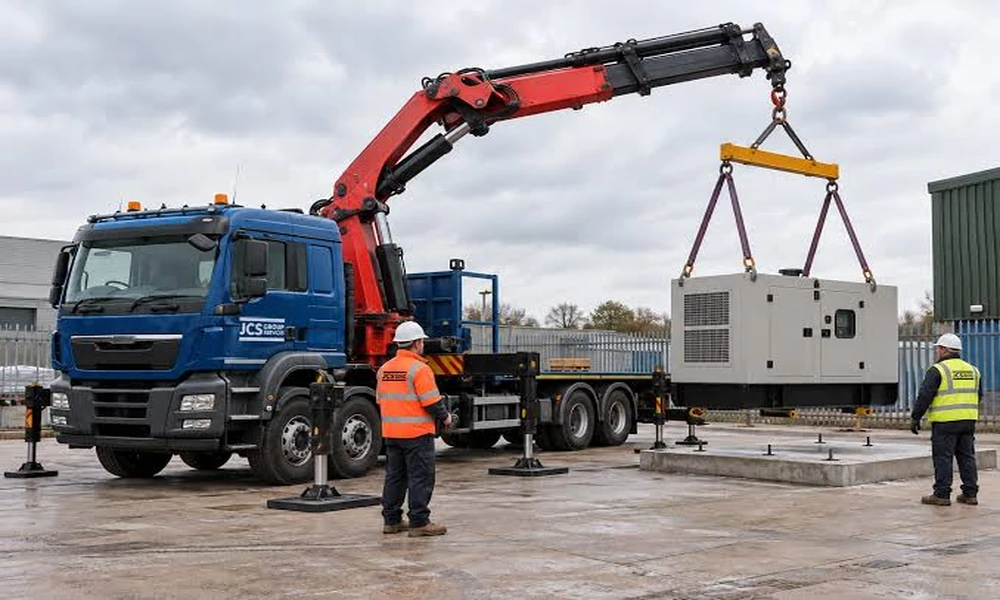
A housing society needs a new water tank lifted onto its terrace. A small factory has a replacement compressor arriving on a trailer. A shop wants a heavy sign fixed above its shutter. Each of these jobs needs a crane for a few hours at most, which is exactly where lifting crane rental by the day comes in.
Daily hire looks simple on paper: a machine arrives, lifts and leaves. The bill tells a fuller story. Two quotes for what sounds like the same crane on rent can differ widely, because each supplier has made different assumptions about hours, travel, crew and paperwork. Knowing what sits behind the daily charge helps you describe the job properly and compare offers fairly.
What Does One Day of Crane Hire Actually Include?
A day of hire is usually a fixed block of working hours agreed in advance. The clock may start when the crane leaves the yard, when it reaches your gate or when it is set up and ready to lift, and suppliers word this differently. That single detail can change what you pay, especially in a city where a short drive can eat up a morning.
Most daily arrangements include the machine, fuel for normal working and an operator. Some add a helper or rigger. Extra hours, night work, holiday work and waiting time caused by a site that is not ready are often charged separately. When you rent a crane for a single lift, ask for the start time, end time and overtime basis to be written into the order.
Why Does Lifting Crane Rental Cost Rise with Capacity and Boom Length?
Capacity is the biggest single factor. A larger crane costs more to buy, insure, maintain and move, and those costs are spread across every day it is hired. Boom length works in a similar way. A load placed close to the crane needs far less machine than the same load swung onto the far side of a building, since lifting capacity drops as the hook moves further out.
Describing the job accurately therefore saves money. Share the weight of the load, how far it must travel sideways from where the crane can stand, and how high it has to go. With those three details, a supplier can suggest the smallest crane that does the work safely, instead of sending something bigger as a cushion and charging for it.
Access plays a part too. A narrow gate, a sloping driveway or a podium slab that cannot carry heavy outrigger loads may force a different crane, or extra mats and planning, and each adds to the day.
Is the Operator Part of the Daily Charge?
Mobile cranes in India are usually hired with an operator supplied by the owner, and that person’s wages sit inside the daily rate. An operator who knows the machine well works faster and with fewer stops, which is one reason rates vary between suppliers who look alike on paper.
Safety obligations carry their own costs. Lifting machines used at Indian workplaces must be examined and load tested by a competent person at regular intervals, a duty that continues under the OSH Code, 2020, India’s consolidated workplace safety law, and the rules framed by each state. A supplier that keeps certificates current, services its fleet and trains its operators is spending real money, and a rate far below everyone else’s can sometimes signal shortcuts. Asking to see the latest test certificate for the crane and its slings before the lift is a sensible habit.
Where Do Mobilisation, Permits and Minimum Hire Fit into the Bill?
Mobilisation is the cost of bringing the crane to your site and taking it back. A truck-mounted crane drives itself, so travel stays modest. Larger machines may need a separate vehicle for counterweights, an escort, or movement only at night on restricted roads, and all of that is billed whether the lift lasts one hour or a full shift.
Permits depend on the city and the site. Parking a crane on a public road, closing a lane or working near a railway line or overhead cable can need clearance from the municipal body, traffic police or the utility concerned, and the time spent arranging it is passed on.
Minimum hire is the usual surprise for first-time hirers. Many suppliers charge a minimum number of hours, or a full day, even for a quick lift, because the crane cannot take another job once it is committed to yours. That is why crane rental per day often works out better than an hourly booking for anything that might overrun. Grouping several small lifts into one visit spreads those fixed costs across more work.
Could an Aerial Platform Do the Job Instead?
Plenty of jobs at height involve people and tools, with no heavy load at all. Changing warehouse lights, painting a façade, fixing signage or inspecting a roof all fall into this group, and an aerial work platform rental often suits such work better than a crane. Boom lifts and scissor lifts are built to carry workers, with guardrails and controls the person in the basket can operate.
Cranes are designed to move materials. Hanging a work basket from a crane hook to carry people is treated as an exceptional arrangement on most sites, with extra checks and approvals, so it seldom makes sense when a platform can reach the spot. Picking the right type of machine at the start avoids paying for capacity the job never uses.
Does Bad Weather Count Against the Hire Period?
In many contracts it does, because the crane and crew stay committed to your site even when strong wind or heavy rain stops lifting, so the day is billed unless the agreement says otherwise. Read the weather clause before confirming, and plan heavy lifts outside the monsoon wherever the schedule allows. Keep the load weight, lift height, access details and preferred date ready when you ask for lifting crane rental rates, since clear information produces quotes you can compare line by line.