

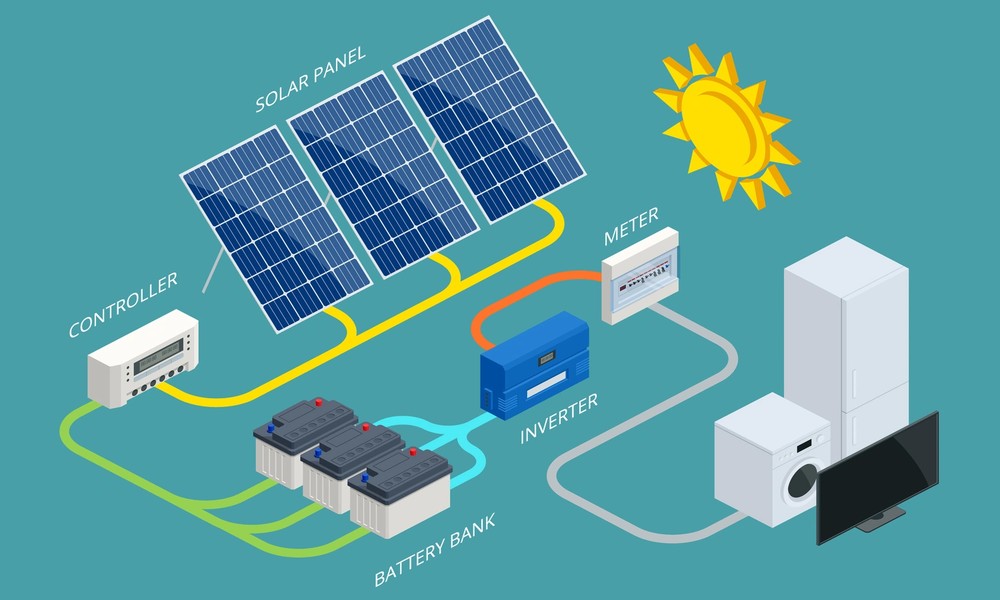
Optimising Solar PV Systems with Battery Storage Solutions
Photovoltaic panels generate most of their electricity during daylight hours. Many households, however, see their highest power consumption in the evenings and at night. This creates a daily mismatch between when clean power is produced and when it is needed most.
A battery storage unit solves this problem. It captures surplus energy from a residential solar array for use later. Homeowners can then power their lights and appliances after sunset, reducing dependence on the National Grid.
Soaring electricity bills provide a strong financial motive for this technology. The UK’s legal commitment to achieve net zero carbon emissions by 2050 adds further impetus. Adopting storage gives a home greater control over its consumption and costs.
This guide offers a detailed look at the process for UK residents. It will cover the technical choices, installation journey, financial considerations, and relevant regulations for 2025. The goal is to help you make an informed decision to enhance your property’s energy resilience.
Key Takeaways
- Solar generation is primarily a daytime activity, while domestic demand often peaks in the evening.
- Battery storage systems save excess solar electricity for use during periods of low generation.
- This technology significantly increases a property’s independence from the mains grid.
- Rising utility bills are a key financial driver for adopting storage solutions.
- The UK’s net zero target supports the shift towards domestic renewable energy solutions.
- Adding storage maximises both the economic return and environmental benefit of a solar installation.
- This resource is tailored for the UK, considering British standards, incentives, and the 2025 landscape.
Understanding the Role of Battery Storage in Solar PV Systems
For a typical UK household, the sun’s energy is abundant during the day, yet the need for power often surges after dark. This mismatch is where a battery storage unit proves its fundamental value. It acts as a reservoir, holding surplus electricity for later consumption.
Enhancing Energy Efficiency
Efficiency improves by capturing excess daytime generation. Homeowners can then power their homes during expensive evening peak rates. This directly reduces reliance on the National Grid.
Without this capability, a grid-tied setup must import power after sunset. The financial benefit of having solar panels is significantly diminished.
Benefits of Storing Excess Electricity
Storing power offers clear advantages. It leads to reduced electricity bills and provides greater energy independence.
Households gain protection from rising utility rates. They also maximise the value of every kilowatt-hour their panels produce.
For those not on export schemes, storage prevents waste. All generated renewable energy can be put to use.
Home Electricity Use: With vs. Without Storage
|
Time of Day |
Solar Generation |
Home Demand |
Action Without Storage |
Action With Storage |
|
Daytime (Peak Sun) |
High |
Low to Medium |
Excess sent to grid or wasted |
Excess used to charge battery |
|
Evening (Peak Demand) |
Low or None |
High |
Power drawn from grid |
Power supplied from battery |
|
Night |
None |
Medium |
Power drawn from grid |
Power supplied from battery until depleted |
Assessing Existing Solar Installations and Energy Needs
Determining the correct size for a new energy reserve begins with a detailed look at current consumption and generation. A certified installer will assess a home‘s unique power profile. They examine how much electricity is used and when.
This review includes the size and output of any existing solar panels. The homeowner’s goals, like bill savings or backup power, are also critical. This ensures the recommended solution fits perfectly.
Evaluating Current Solar Panel Output
For homes with an existing solar setup, the installer checks several factors. They look at the solar panel system’s size, orientation, and any shading. Historical generation data reveals how much surplus electricity is typically available.
Understanding household habits is equally important. The average UK home uses between 8kWh and 10kWh daily. Installers identify peak usage times and total consumption.
Matching battery storage capacity to both this usage and solar output is key. It prevents buying a unit that is too small or too large. The ideal system covers evening needs and recharges fully each day.
Integrating Battery Storage with Solar PV Systems
To capture and hold surplus daytime generation, the new hardware must be correctly integrated into the home’s electrical network. This process demands professional expertise. A qualified installer ensures the unit works seamlessly with the existing setup.
Step-by-Step Installation Tips
The process begins with a detailed site survey. An expert assesses compatibility and plans the physical and electrical connections.
Key installation activities typically include:
- Selecting an optimal, well-ventilated location for the new unit.
- Ensuring all components, including any required inverter, are compatible.
- Executing safe electrical wiring with proper circuit protection.
- Configuring the system’s control and monitoring software.
Final testing and commissioning confirm everything operates safely and as intended.
Maximising Storage Capacity
Correct configuration is vital for performance. The system should be set to charge efficiently from the panels during daylight hours.
Smart management features can learn a household’s routine. They then schedule discharge to match evening consumption peaks. Understanding the unit’s recommended depth of discharge helps preserve its long-term health and available power.
Installation Process and Key Safety Considerations
The safe addition of a power reserve to a property hinges on strict adherence to UK safety regulations. A professional installation by a certified electrician is mandatory. This ensures all work meets the latest British Standards.
Compliance with UK Wiring Regulations
All electrical work must follow the BS 7671 wiring regulations. Qualified installers implement specific circuit protection. This includes Miniature Circuit Breakers (MCBs) and Residual Current Devices (RCDs).
Proper earthing and cable specifications are vital. Clear labelling of all components is also required. This safeguards anyone working on the home‘s electrics in future.
Adhering to PAS 63100:2024 Fire Safety Standards
New 2024 fire safety guidance introduces strict location rules. Battery units must not be placed in lofts, bedrooms, or on escape routes.
Approved, well-ventilated locations include:
- Utility rooms
- Garages
- Purpose-built external enclosures
Mounting surfaces must be certified as fire-resistant. Installers must also ensure adequate airflow to prevent overheating. These measures manage thermal risk effectively.
Homeowners can be reassured by the excellent safety record. A 2020 government review found very few domestic incidents involving these systems.
“…there have been few recorded fires involving domestic lithium-ion battery storage systems.”
When installed correctly, modern storage systems offer a safe way to enhance a home‘s energy resilience.
Retrofitting Battery Storage to Existing Solar Systems
Many UK homeowners with photovoltaic panels installed years ago now seek to add a power reserve. Retrofitting battery storage to an existing solar setup is almost always technically possible. The optimal method depends on the current configuration and the homeowner’s goals.
Comparing AC and DC Coupled Systems
Two primary coupling methods exist for adding a solar battery. AC-coupled units connect after the generation metre and existing inverter. This makes them easier to fit to older systems.
DC-coupled options connect directly to the panels. They avoid some power conversion losses. However, they usually require a new hybrid inverter.
AC-Coupled vs. DC-Coupled Systems for Retrofits
|
Feature |
AC-Coupled System |
DC-Coupled System |
|
Connection Point |
After inverter & generation metre |
Direct to solar panels |
|
Retrofit Ease |
High – works independently |
Low – often needs new inverter |
|
Efficiency |
Good (some conversion loss) |
Very Good (less conversion) |
|
FiT Contract Impact |
None – metre sees all generation |
Potential complication |
|
Grid Charging Ability |
Yes |
No |
Selecting the Right Inverter
The inverter choice is critical. For a simple retrofit, an AC-coupled battery allows the existing solar inverter to remain. This protects any Feed-in Tariff payments.
Upgrading to a hybrid inverter enables a DC-coupled setup. This suits those planning a larger system expansion. Consider the age and condition of current equipment before deciding.
Expert Advice and Industry Standards
Industry standards and certifications provide a reliable framework for selecting a competent installer. Homeowners should verify their chosen professional holds relevant accreditations. This ensures technical proficiency and adherence to strict customer service guidelines.
The Microgeneration Certification Scheme (MCS) is a key benchmark. MCS-certified professionals have demonstrated competence in battery storage installation. This certification also facilitates access to formal complaints procedures if required.
Some firms may be certified by the Flexible Energy Oversight Registration Body (Flexi-Orb). It is wise to confirm if a specific energy supplier accepts this for export tariffs. Membership of the Renewable Energy Consumer Code (RECC) offers further consumer protection. RECC members commit to high standards of conduct and information provision.
Insights from Frontier Energy Ltd
Frontier Energy Ltd highlights that expert systems design begins with a thorough energy assessment. Reputable firms evaluate household consumption patterns and existing infrastructure. This data informs equipment selection and realistic performance forecasts.
Compliance with evolving safety standards, like PAS 63100:2024, is non-negotiable. Frontier Energy and other leading installers integrate these rules from the initial design phase. They provide clear details on warranty terms, maintenance, and expected financial benefits.
Staying current with rapidly advancing technology and regulations is essential. Professional installers ensure their work incorporates the latest best practices. This delivers safe, compliant, and optimally performing home power solutions.
Maximising Energy Efficiency and Reducing Bills
Maximising financial returns from renewable generation involves engaging with export payment schemes. A well-configured unit allows homeowners to use their own electricity during expensive peak times. This directly slashes network purchases and boosts energy independence.
Understanding the Smart Export Guarantee
The Smart Export Guarantee (SEG) obliges large suppliers to pay for surplus power sent to the grid. This export guarantee replaced the old Feed-in Tariff. Homeowners should compare SEG tariff rates to find the best offer.
It is vital to check eligibility if a solar battery storage system is installed. Some energy tariffs even pay for allowing the unit to store excess network power.
Intelligent management can further optimise savings. Some electricity tariffs have cheap off-peak periods. The unit can charge then and power the home during costly peaks.
Actual bill reduction depends on consumption habits and system size. Regular monitoring helps adjust settings for maximum efficiency.
Battery Storage Options and Product Comparisons
The core component of any home energy reserve is its battery chemistry. This fundamental choice dictates performance, lifespan, and overall value.
Understanding the available technologies enables informed decision-making. Homeowners should evaluate specifications and long-term benefits.
Lithium-Ion versus Lead-Acid Technologies
Lead-acid batteries represent a legacy type. They offer a lower initial price but come with significant trade-offs.
Their cycle life is often short, ranging from 300 to 1,500 charge cycles. Usable capacity is typically shallow, around 50% of the rated figure.
These units require regular maintenance and are bulky. Frequent replacement adds cost over the years.
Lithium-ion batteries are the modern standard for residential solar batteries. They command a higher upfront investment but deliver superior economics.
Benefits include a much longer lifespan, often exceeding 6,000 cycles. They allow a deeper depth of discharge, sometimes up to 100%.
Maintenance is minimal, and their energy density is high. This means a compact, lightweight design.
Lithium Iron Phosphate (LiFePO4) is a leading chemistry. It provides exceptional safety, longevity, and performance across temperature ranges.
Typical UK home storage systems range from 5kWh to 15kWh. The optimal size depends on household consumption and generation patterns.
When comparing products, consider warranty terms and compatibility. Several popular brands offer reliable solar battery solutions in the market.
Installation Costs and Financial Considerations
A clear grasp of pricing, available support, and future savings shapes the decision to invest in this technology. This section breaks down the initial cost, financial help, and long-term value for UK homes.
Exploring Grants, Loans and Incentives
Homeowners in Scotland can access specific support. A combined grant and interest-free loan of up to £6,000 is available for storage. This requires installing it as part of a broader energy efficiency package.
The loan repayment period is five years. Across the UK, the zero-rate VAT on battery installation offers a significant saving. Dedicated grant schemes elsewhere are currently limited.
Long-Term Savings and Payback Periods
Payback time depends on several variables. These include the system cost, household usage, and electricity tariff prices.
With current high electricity rates, payback often falls between 7 and 12 years. It is vital to consider product lifespan. A solar battery storage unit typically has a 10-year warranty, while panels last 25+ years.
Budgeting for a potential replacement is wise. For the best return, paying upfront from savings is preferable to financing with interest.
Maintenance, Monitoring, and System Management
Modern battery storage units are designed for minimal upkeep, yet offer powerful tools for owners to track performance. Once installed, they largely operate as a ‘fit and forget’ solution. Homeowners receive sophisticated monitoring access alongside essential documentation.
This ongoing management ensures the home energy setup continues to deliver optimal financial and environmental returns. It involves understanding both automated processes and simple user checks.
Advanced Monitoring Apps and Tools
Most contemporary battery systems include user-friendly apps or web portals. These provide real-time visibility into energy flows and storage levels.
Homeowners can monitor the current state of charge and see live power movements. Historical data shows daily electricity generation, consumption, and calculated savings.
Reviewing this information periodically allows for further optimisation. Families might adjust charge schedules or switch to more advantageous tariffs based on their use patterns.
Routine maintenance is straightforward. It involves a visual inspection to ensure ventilation pathways are clear. Checking for any warning indicators on the unit’s display is also wise.
All battery technologies experience gradual capacity loss over time. Quality lithium-ion units typically retain 70-80% of their original capacity after 10-15 years of daily cycling.
It is crucial to safely store all installation paperwork. This includes the Electrical Installation Certificate, DNO notification, and warranty documents. These are essential for insurance, future property sales, or any service claims.
Regulatory Compliance and DNO Notification
Before any physical work begins, understanding the legal framework ensures a smooth installation process. Adding battery storage involves specific rules and notifications. These protect the homeowner and maintain the safety of the local electricity grid.
For most UK homes, a new storage unit falls under permitted development rights. This typically means no formal planning permission is needed. Exceptions include listed buildings and properties in designated conservation areas.
Understanding Permitted Development Rules
These rights streamline the process for standard installations. The battery unit must meet criteria on size and visual impact. A competent installer will advise if your project qualifies.
For all grid-connected systems, notifying the Distribution Network Operator (DNO) is mandatory. Your installer handles this submission, providing technical details. The DNO confirms the setup meets network standards.
Upon completion of the installation, you must receive an Electrical Installation Certificate (EIC). This proves the work complies with BS 7671 wiring regulations. It is also wise to inform your home insurance provider about the new battery system.
Most domestic retrofits are completed within one to two days. This covers mounting, electrical connection, and paperwork. Professional handling of these steps offers peace of mind.
Innovations in Solar and Battery Integration
Recent advances are making home energy storage more efficient and accessible than ever. Groundbreaking technologies simplify retrofits and boost performance.
Emerging Technologies in Home Energy Storage
Direct PV-coupling is a key innovation. It allows new solar batteries to connect easily to existing grid-tied solar systems.
This method avoids complex extra hardware. Modern units offer large capacity, sometimes up to 45kWh. They can even provide backup power off-grid.
Advanced battery management extends lifespan. Some models achieve over 6,000 cycles while keeping most of their original energy.
Built-in features like auto-heating ensure winter reliability. Integrated fire protection adds safety. Intelligent software automatically switches to battery storage during costly peak hours.
Sustainable Solutions from Frontier Energy
Forward-thinking providers focus on holistic energy management. They combine generation, storage, and smart controls into one optimised storage system.
Sustainability efforts include better recycling programmes. They also use ethically sourced materials for longer-lasting products.
Emerging capabilities like vehicle-to-home technology turn electric cars into mobile battery reserves. This creates a more resilient and economical home energy ecosystem.
Conclusion
For homeowners across the UK, embracing battery technology transforms a solar investment from a simple generator into a comprehensive energy solution. This step is far more than a technical upgrade; it represents a fundamental shift towards smarter, independent living.
A well-planned battery storage unit grants unprecedented control over electricity use and costs. It reduces reliance on the utility grid and protects against rising prices. The initial investment is offset by long-term bill savings and enhanced security.
Success hinges on careful planning. Household consumption patterns, technology choice, and professional installation by a certified installer are all critical. The UK’s supportive framework, with zero-rate VAT and the Smart Export Guarantee, facilitates adoption.
Ultimately, adding solar battery storage is a strategic move towards home energy independence. It maximises the value of solar panels and builds resilience for the future.
FAQ
Why should I add a battery to my existing solar panels?
Adding an energy storage unit allows you to capture surplus electricity generated by your photovoltaic panels during the day. You can then use this stored power in the evening, significantly increasing your self-consumption and reducing reliance on the grid, which leads to lower energy bills.
What are the key steps for installing a home battery system?
The process typically involves a site survey, selecting a compatible unit and inverter, and professional installation by a certified technician. It is crucial to ensure the work complies with UK Wiring Regulations (BS 7671) and the latest fire safety standards, such as PAS 63100:2024.
How does the Smart Export Guarantee (SEG) benefit me?
The Smart Export Guarantee is a government-backed tariff. It requires certain energy suppliers to pay you for any renewable electricity you export back to the national grid. Pairing this with a battery can maximise your earnings by allowing you to export surplus energy at optimal times.
What is the difference between lithium-ion and lead-acid technologies?
Lithium-ion units, like those from Tesla or GivEnergy, offer a longer lifespan, greater depth of discharge, and higher efficiency in a more compact size. Traditional lead-acid batteries are generally less expensive upfront but have a shorter operational life and require more maintenance.
Are there any grants or loans available for battery storage?
While direct grants for home energy storage are limited, some local authority schemes may offer funding. Additionally, financing options like green loans are available from providers such as banks and specialist lenders to help spread the initial cost of the installation.
Do I need to notify my Distribution Network Operator (DNO)?
Yes, in most cases. Your installer must notify your local DNO, such as UK Power Networks or Western Power Distribution, of the new storage installation. This is a mandatory step to ensure the safety and stability of the local electricity network.
Can I retrofit a battery to my older solar panel array?
Yes, retrofitting is a common and effective upgrade. An installer will assess your current setup to determine the best coupling method-either AC or DC-and ensure you have a compatible inverter, such as a hybrid model, to integrate the new storage unit seamlessly.
What maintenance does a home battery require?
Modern lithium-ion systems require very little routine maintenance. It is recommended to have a professional check the installation periodically. Using advanced monitoring apps provided by manufacturers allows you to track performance and health remotely from your smartphone.